Legacy media must reinvent, not just evolve, says Zee Media CEO Raktim Das
Raktim Das, CEO, Zee Media Corporation Limited engaged in a fireside chat at e4m TechManch 2026 and spoke on the sector’s challenges and the need for transformation
 by
by
Published: Jul 28, 2026 3:24 PM | 7 min read
 Follow Us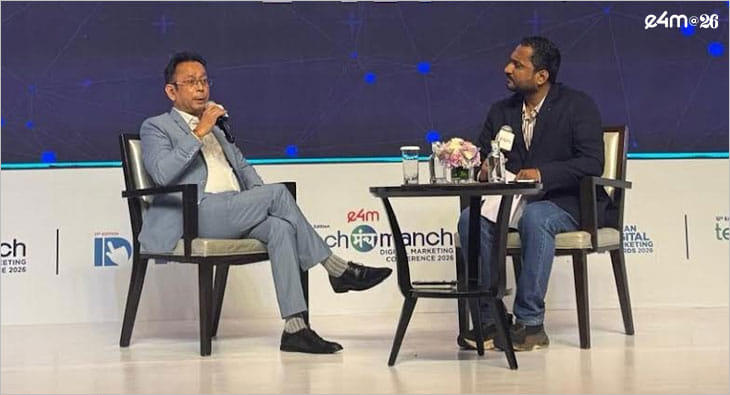

- Raktim Das, CEO of Zee Media Corporation, emphasizes the need for legacy media organizations to undergo fundamental transformations in structure, operations, and commercial strategies to adapt to a rapidly changing news landscape.
- He advocates for an "omni-channel" approach, where news content is produced for multiple platforms simultaneously, integrating television and digital as inseparable components of a single news brand.
- Das highlights the importance of trust as a competitive advantage for news organizations, asserting that credibility stems from authenticity and reliability, and stresses the role of AI in enhancing newsroom productivity while maintaining human editorial judgment.
- Zee Media is exploring new revenue models beyond traditional advertising, focusing on consumer-driven monetization and integrated advertising solutions, while also adapting to the challenges posed by AI-generated content and changing audience discovery methods.
The media industry is no longer witnessing incremental change but a fundamental transformation that requires legacy organizations to rethink their structures, newsroom operations and commercial strategies, believes Raktim Das, CEO, Zee Media Corporation Limited.
Speaking during a fireside chat at e4m TechManch 2026, Das said the future of news organizations will depend less on whether they are television broadcasters or digital publishers and more on whether they can build trusted brands that seamlessly serve audiences across every platform while creating new monetization opportunities beyond traditional advertising.
"The defining challenge for every legacy media company is transformation," Das said, adding that this transformation has two dimensions—organizational restructuring to build agile, technology-enabled newsrooms and redesigning business models to better solve advertisers' needs.
Accordingly, Zee Media is reshaping its business around an omnichannel news ecosystem, artificial intelligence and international revenue streams as the news industry undergoes one of its biggest structural shifts.
According to Das, traditional newsrooms built around television-first workflows need to cater to audiences that consume content across television sets, mobile devices and other hand-held devices besides websites, connected TVs and social platforms.
He said legacy media companies must dismantle organizational silos and adopt an ‘omni-content’ approach where content is produced simultaneously for multiple formats and platforms. "The consumer today is available across multiple platforms. News organizations need to operate as an omni-channel ecosystem," he said.
Television and digital are no longer separate businesses
Das rejected the notion that television and digital compete against each other, saying both have become inseparable components of a single news brand. While television continues to deliver breaking news and immediate headlines, digital platforms provide contextual storytelling, explainers and analysis that help audiences understand the "why" and "how" behind developments.
“It's not either-or. Television remains our strongest trust-building platform, while digital drives engagement, personalization, and younger audiences. Reach remains important, but engagement, loyalty, trust, watch time, returning users, and revenue per user have become equally important. Reach gets you noticed; engagement builds relationships. Sustainable growth comes from audiences who return, interact, and trust your brand repeatedly,” he said.
He compared news distribution to modern retail, where consumers can purchase the same product from exclusive brand stores, marketplaces or quick-commerce platforms. “Similarly, news content must be available across television, smartphones, laptops, gaming consoles and other connected devices while being adapted into multiple formats, including vertical videos, horizontal videos, short-form clips and long-form programming," he said.
Trust becoming the defining competitive advantage
Despite the explosion of creator-led content and information available online, Zee Media CEO Das believes trust will remain the biggest differentiator for established news organizations.
He emphasized that trust cannot be built overnight and extends beyond simply being the fastest to break a story.
According to him, credibility rests on authenticity, reliability, affinity with audiences and the ability to consistently explain events rather than merely report them.
“Technology can make news faster, smarter, more personalized, and more accessible. Trust ensures that it remains credible, responsible, and meaningful. One without the other is not enough,” he explained.
On whether content creators producing news should face tighter government regulation, Das refrained from advocating additional oversight and instead stressed the importance of self-regulation.
AI becoming central to newsroom transformation
Artificial intelligence has become an integral part of Zee Media's newsroom transformation strategy, confirmed Das.
“AI will dramatically improve productivity—from research and multilingual publishing to video creation and personalization. Most importantly, it frees journalists to spend more time on reporting, investigation, and storytelling. AI can assist journalism, but it cannot replace editorial judgment. Every critical editorial decision must remain human-led,” he said.
However, he stressed that newsroom adoption of AI must happen gradually, particularly because many journalists have worked under traditional workflows for years.
The focus, he said, should be on simple, intuitive tools that encourage adoption rather than complex systems that create resistance.
AI search disrupting publisher economics
Das acknowledged that the rapid rise of AI-generated search results has fundamentally altered how audiences discover news online, creating a difficult dilemma for publishers.
He noted that AI-generated summaries increasingly answer users' queries directly, reducing traffic to publishers' websites and weakening traditional search engine optimization (SEO)-driven business models.
He described the transition from SEO to Generative Engine Optimization (GEO) as one of the biggest structural changes confronting digital publishers.
According to Das, publishers face a difficult choice: allow AI platforms to access their content and potentially retain visibility, or restrict access in pursuit of licensing revenues while risking audience traffic.
"It's a chicken-and-egg situation," he said.
Although he stopped short of endorsing mandatory compensation from AI companies, Das said the issue requires industry-wide deliberation and a unified approach because publishers invest heavily in producing original journalism that is increasingly being used to train AI systems.
Revenue diversification beyond advertising
Das said Zee Media is actively working to reduce dependence on advertising revenues by exploring consumer-driven monetization models.
With digital platforms attracting nearly 100 million users, he believes even modest average revenue per user could become a significant contributor to the company's earnings.
He pointed to health, wellness, personal finance, taxation, investments, banking and technology as categories where audiences may be willing to pay for expert guidance. Using Zee Business as an example, Das said subscribers could find value in explainers on tax regimes, SIP investments, KYC requirements and financial planning tailored to different demographic groups.
Integrated advertising solutions gaining prominence
Das said advertisers increasingly seek unified campaigns spanning television, digital publishing, social media, branded content, events and technology-driven marketing solutions.
Rather than selling isolated advertising inventory, Zee Media aims to address specific business challenges faced by advertisers through integrated offerings. He said the company is focussing on advanced advertising technology capable of serving contextually relevant rich ads based on editorial content.
Beyond advertising, Zee Media is also expanding branded content initiatives and pursuing additional revenue opportunities from international markets.
BARC suspension prompted internal transformation
Commenting on the temporary suspension of Broadcast Audience Research Council (BARC) television ratings, Das described the disruption as an opportunity rather than merely a setback.
While acknowledging that BARC ratings remain the primary currency for television advertising, he said Zee Media is using the period without ratings to experiment with its content strategy.
According to Das, the company focused on building an integrated news ecosystem and strengthening newsroom operations around two pillars—trust and technology.
"BARC is important, but when the ratings are unavailable due to factors beyond our control, we use the opportunity for introspection and transformation," he said.
Calls for self-regulation on advertising limits
Addressing the ongoing debate around television advertising caps following legal proceedings related to ad-duration limits, Das declined to comment on the specifics of the litigation but reiterated the importance of industry self-regulation.
Rather than focusing on whether advertising should be capped at 10+2 minutes, 12 minutes or 15 minutes, he argued that broadcasters should ensure an optimal balance between editorial content and commercial breaks.
The objective, he said, should be to deliver the best possible viewing experience regardless of whether audiences consume news through traditional television, connected TVs, YouTube or other digital platforms.
Measuring success
Das said Zee Media's long-term success will increasingly be measured through audience trust, engagement, watch time, loyalty and repeat users. Revenue, he argued, naturally follows when a news organization builds strong audience affinity and credibility.
Das concluded that Zee Media will continue strengthening its core news business through technology adoption, trusted journalism and integrated advertising capabilities as it positions itself for the next phase of growth in an increasingly platform-agnostic media landscape.
Read more news about Marketing News, Advertising News, PR and Corporate Communication News, Digital News, People Movement News
For more updates, be socially connected with us onInstagram, LinkedIn, Twitter, Facebook, YouTube & Google News